Building in Bali
Waterproofing is one of the things we specialise in.
Not a line on a services list. The team behind Fidé includes waterproofing, marble and stone specialists, and this page is the method, not just the promise.
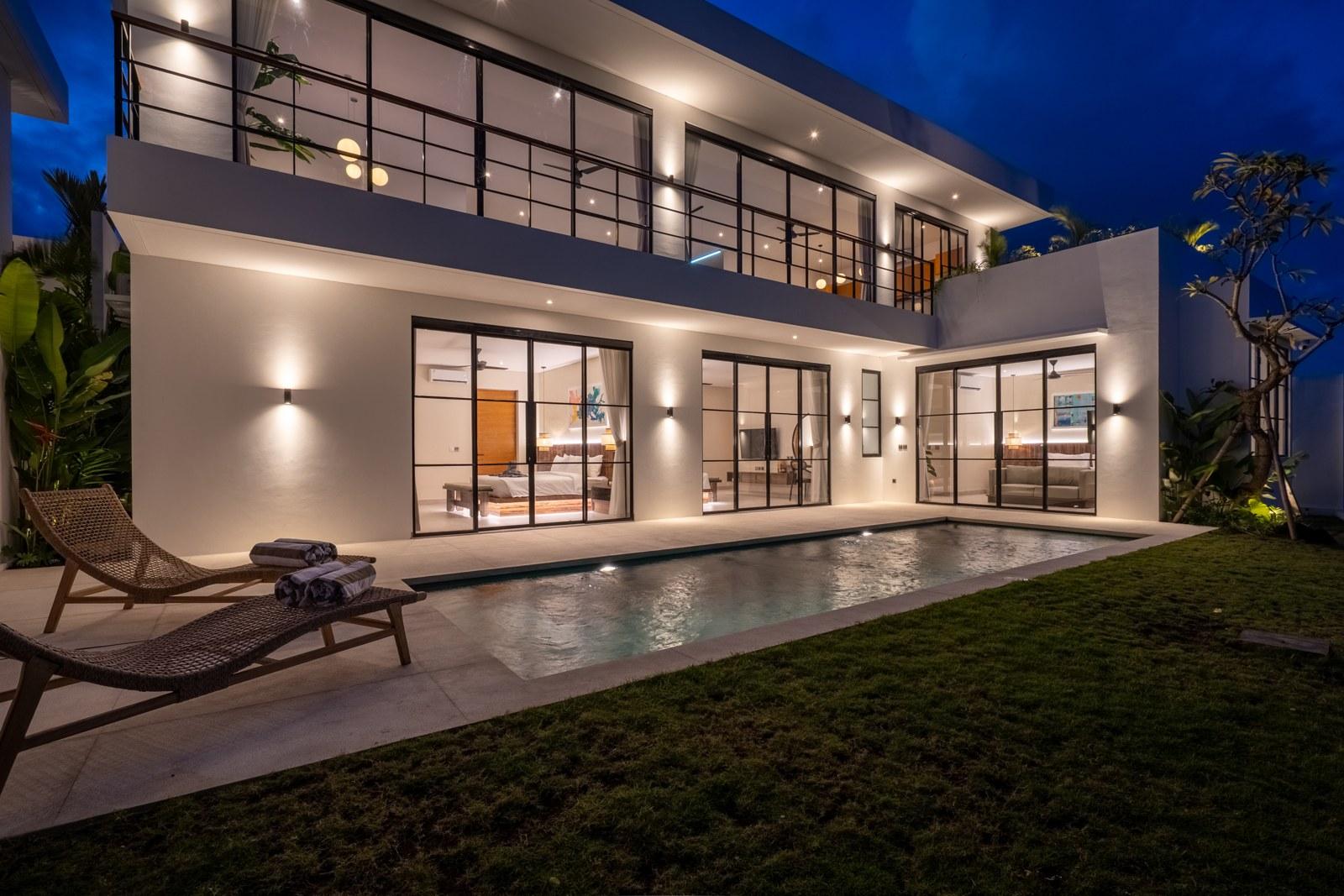
Waterproofing on a Bali villa has to survive monsoon rain for months, humidity that barely drops even in the dry season, and in most designs a pool sitting directly against living space. The team behind Fidé includes specialists in waterproofing, marble and stone specifically because of how often this is the difference between a villa that lasts and one that does not.
This page goes into the actual method: the membrane systems we use and where, the junctions that fail first and why, and the testing sequence every one of them goes through before it is allowed to disappear under tiling or render.
Why it fails here specifically
Bali does not give waterproofing a season off. Monsoon rain for months, humidity that barely drops even in the dry season, and on most villas a pool sitting right against living space. A detail that would last decades somewhere drier is being tested every week here.
Most failures are not visible for a year or two. By the time it shows up as a stain or a damp wall, the finish sitting on top of it makes the actual point of failure hard to find, and the person who did the work has usually moved on to another job.
That gap, between when a mistake is made and when it becomes visible, is why waterproofing is one of the most commonly disputed parts of a Bali build. Nobody is lying. Nobody can prove what happened either. The only real defence is catching it before it is covered, which is the whole reason a proper testing sequence matters more than the product label.
It starts as a design choice, not just a build one
Heavy, poorly installed concrete and terracotta tile roofing is not our preferred method of construction. That is a genuine design position, not just a build detail, and it comes from what actually fails on this island rather than what looks traditional in a render.
Flat roofs are the number one source of leaks in Bali, and almost always for the same reason: a proper torched asphalt membrane was never designed, applied correctly and tested with genuine fall for drainage. Done properly, a flat roof performs well here. Skipped or rushed, it is the single most common offender we see.
Indonesia sits on the Ring of Fire, and minor earthquakes happen here most days. That constant, low-level movement opens hairline cracks in traditional concrete and tile roofing that a more stable climate would never expose, and once a crack exists, water finds it.
Wind, harsh sun, monsoon rain and animals all work against a tiled roof over time, dislodging or wearing tiles loose even where the original installation was correct. Concrete itself is porous, so water works its way through slowly over years rather than announcing itself immediately.
This is why we get involved at the design stage rather than waiting to be handed a roof plan. We will guide that decision based on what we have actually seen work and fail here, not on what looks right on a mood board.
The systems we actually use, and where
Not a trade secret. This is standard professional practice, applied properly rather than skipped under schedule pressure, which is where most Bali builds actually go wrong.
Cementitious and liquid-applied membranes
- Used on wet areas, roofs and planter boxes: bathrooms, laundries, roof slabs, and any planter or garden bed built against the structure
- Applied in multiple coats, not one, with the specified drying time between coats rather than a compressed one
- Turned up the wall at every junction, not just laid flat on the floor, because the floor is rarely where the leak actually starts
Torch-on and sheet membranes
- Used on larger flat and low-slope areas: main roofs, terraces and podium slabs over habitable space
- Lapped and sealed at every join, with the laps in the direction that sheds water rather than collects it
- Protected with a screed or protection board before anything else is built on top, so the membrane is never the surface people actually walk on
Pool-specific waterproofing
- Treated as its own system, not an extension of the surrounding floor
- Every pipe and light penetration through the shell sealed individually, because a penetration is the single most common pool leak point
- The junction between the pool wall and the surrounding deck given a proper movement joint, so the two structures can move independently without tearing the membrane between them
The junctions that fail first
Waterproofing almost never fails in the middle of a flat surface. It fails where two things meet.
- Where a planter box or garden bed sits against the villa structure. Soil holds moisture against the wall permanently, which is a harder test than open rain.
- The floor-to-wall junction in a bathroom, especially behind a shower screen where nobody looks until there is a stain on the ceiling below.
- Pipe and light penetrations through a pool shell or a roof slab, because a membrane run over a hole is not the same as a membrane sealed around one.
- Movement joints and cold joints in the concrete itself, where two pours meet and the structure is not one continuous piece.
- Parapet walls and roof-to-wall junctions, which take direct rain from one side and are easy to under-detail because they are rarely seen from the ground.
The testing sequence before anything covers it
A membrane that has not been tested is an assumption, not a fact. Every wet area and roof gets flood-tested, water held on the surface for a set period, before tiling or screed goes down. If it fails, it is redone at that stage, while it is still cheap to fix, not after the room is finished.
The same applies to a pool shell before it is tiled: filled and held, checked for level and for any drop that points to a leak, corrected before the finish goes on top of a fault nobody could see again afterwards.
This is the actual difference between a build where waterproofing holds and one where it does not. Not a better product. A test that happens before the point where a mistake becomes invisible, on a schedule that protects the time it takes rather than compressing it to hit a handover date.
The usual way, and what we hold to
The products involved are not unusual. What differs is whether the sequence below is actually followed under schedule pressure.
| How it usually goes | What we hold the build to | |
|---|---|---|
| Testing before covering | Assumed correct because nothing has leaked yet at handover. | Flood-tested and checked before tiling, screed or backfill goes on top. |
| Who is responsible | The trade that did it, until the next trade covers it. After that, it is nobody's in particular. | The same team, from the first stage to handover and after. There is no subcontractor to point at. |
| Penetrations and junctions | Membrane run over the top and hoped for. | Sealed individually, because this is where almost every real failure starts. |
| Cure time under schedule pressure | The date on the calendar usually wins. | Bali's climate does not negotiate on cure time, and neither do we. |
What it costs to get wrong
Ordinary upkeep in Bali is not optional for anyone. Repainting, tiles, gardens, the pool. That happens every year regardless of how well a villa was built, because this is the tropics.
Waterproofing failure is a different category of cost. It is structural repair rather than upkeep, finishes that have to be redone rather than refreshed, and a villa that cannot be rented while the work happens. That is the number that never shows up in a build budget until it does.
Questions worth asking, of anyone
- Can waterproofing be guaranteed in Bali?
- No responsible builder guarantees it will never need attention again, because everything ages here faster than it does elsewhere. What can be controlled is whether it was installed correctly, tested before it was covered, and checked at the junctions that actually fail rather than assumed fine because the flat areas look right.
- How do I know if my villa's waterproofing was actually done properly?
- Ask whether it was flood-tested before the tiling or screed went down, and whether that test is on record. Ask specifically about the planter boxes, the pool penetrations and the bathroom floor-wall junctions, because that is where almost every real failure starts. If nobody can answer with specifics, it was not tested. It was assumed.
- Is this page giving away a method a competitor could just copy?
- The systems and testing sequence above are standard professional practice, not a secret formula. What is much harder to copy is actually doing it under schedule pressure on every job, which is the part this page is honest about being the real difference.
Where this comes up
Ask to see the testing records on a build you're considering.
We can show you what was tested, when, and what the result was, for our own projects. Book a meeting and we will walk you through it.